
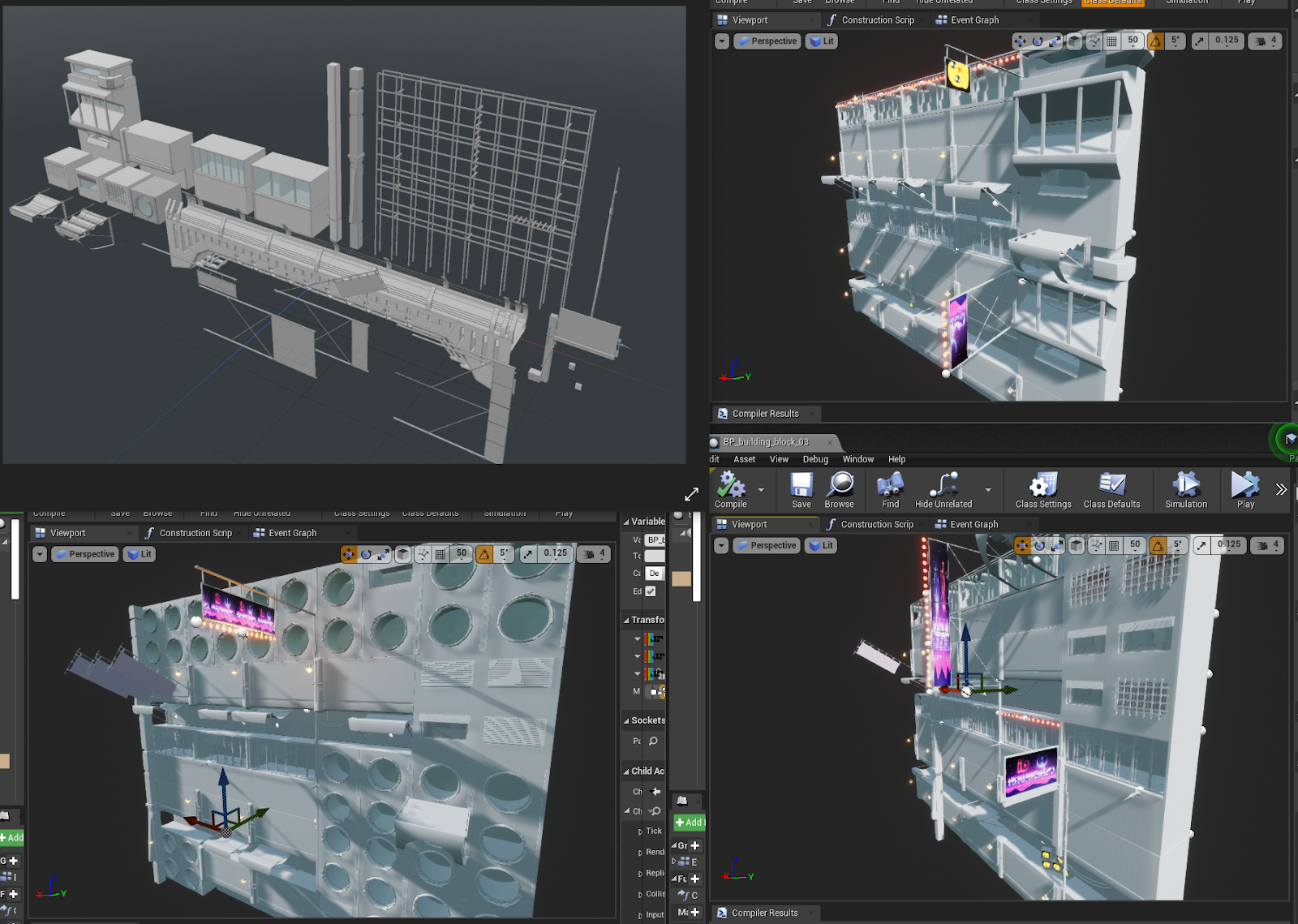

In the world of 3D game development, we often focus on the grand scale: sweeping landscapes, imposing structures, and photorealistic lighting. These elements are undoubtedly crucial for creating an immersive game space. However, the true magic—the element that bridges the gap between a nice-looking scene and a truly believable, captivating world—lies in the art of detailing.
Detailing, often an overlooked or rushed phase in the development pipeline, is arguably the single most important factor in achieving player immersion and conveying a strong sense of environmental storytelling. It’s the difference between walking through a digital gallery and actually living within a virtual space.
🎨 Beyond the Polygon Count: Defining ‘Detailing’
What exactly do we mean by detailing in a 3D environment? It’s more than just a high polygon count or a high-resolution texture. Detailing encompasses all the small, deliberate choices that give an object or an area character, history, and physical presence.
This includes:
-
Micro-Surface Imperfections: Scratches on a metal surface, smudges on glass, chipped paint on a wooden beam, and subtle dirt accumulation in crevices. These details are often handled via specialized material maps (like Roughness, Normal, and Ambient Occlusion) within a PBR (Physically Based Rendering) workflow.
-
Clutter and Props: The placement of objects that suggest human or creature activity. A half-eaten meal, scattered tools on a workbench, stacks of forgotten books, or a discarded cigarette butt.
-
Wear and Tear: Evidence of the environment’s age and use. Rust, moss growth, dust layers, water damage, and fading colors. A brand-new looking environment, unless it’s a specific art style choice, immediately feels sterile and fake.
-
Decals and Graffiti: Applied textures (decals) that add temporary or localized details, such as posters, footprints, blood splatters, scorch marks, or street graffiti.
🧠 The Psychology of Immersion: Why We Notice the Small Stuff
Players are remarkably perceptive, and their brains are constantly searching for clues to validate the virtual world they inhabit. When a world is detailed correctly, the player’s subconscious mind accepts the environment as real because it adheres to the laws of physics and history as we know them.
1. Environmental Storytelling
A lack of detail forces the player to only see what is. With detailing, the player begins to understand what happened.
-
A pristine, unused door tells you nothing.
-
A door with a broken, splintered lock and deep axe marks tells you that someone desperately tried to get in, or out, and failed. This single detail creates a mini-narrative, adding tension and history to the space without needing a single line of dialogue or text.
Key takeaway: Good detailing transforms static assets into story prompts. It answers the “who, what, and why” of the environment, making the player feel like an archaeologist uncovering a hidden history.
2. Visual Fidelity and Believability
The real world is not perfect. It’s messy, chaotic, and aged. A clean, perfectly textured wall breaks immersion because it visually screams “computer graphics!” Detailing introduces the necessary randomness and imperfection that our brains associate with reality.
The key to hyper-realism often isn’t just how much detail, but where the detail is placed. Realism is achieved when:
-
Dirt pools in corners (Ambient Occlusion/Cavity maps).
-
Edges are slightly worn or chipped (Beveling and edge wear shaders).
-
Areas frequently touched have lower roughness values (e.g., the handle of a frequently used weapon or the center of a worn floorboard).
This careful application of imperfection fools the eye and makes the 3D model feel like a tangible object that has existed in time and space.
3. Enhancing Gameplay and Pacing

Detailing can serve a functional purpose beyond aesthetics, often guiding the player through the game space.
-
Visual Language: A trail of specific debris or unique decals can subtly lead the player toward an objective or highlight a point of interest (a technique known as visual breadcrumbing).
-
Pacing and Tension: A long, empty corridor might lull the player into a sense of complacency, while the sudden appearance of heavy, detailed blood spatters on the floor and walls can instantly ramp up the tension and signify a recent, violent event.
-
Scale and Presence: A huge, unblemished column feels flat. A huge column covered in detailed, creeping moss, water streaks, and ancient carvings suddenly feels massive and centuries old, giving it a palpable weight and scale.
🛠️ Common Pitfalls and the Power of Subtlety
The danger with detailing is the temptation to overdo it, leading to a phenomenon known as “detail fatigue” or “visual noise.”
❌ The “Max Detail” Trap

A beginner often falls into the trap of setting every texture to $4k$ resolution and applying excessive dirt to every surface. This can make the scene look busy and unreadable. The player’s eye has no place to rest, and important gameplay elements get lost in the noise.
The Golden Rule: Detail with intent.
-
Focus Areas: Concentrate the highest level of detail (unique textures, custom props) around areas the player will spend the most time or areas critical to the story (e.g., a quest giver’s desk, a main character’s apartment, a puzzle location).
-
The 80/20 Rule: 80% of your environment should be built from modular, low-detail assets, and the remaining 20% should be dedicated to highly-detailed, unique assets and prop placement that define the space.
-
Contrast is Key: The beautiful patina on an old book is only effective if it’s placed next to a cleaner, less-detailed object to provide a visual anchor. The contrast draws the eye and highlights the detail.
🏆 Conclusion: Detail is an Investment
Developing a truly rich and immersive 3D environment requires treating detailing not as a final polish step, but as a core part of the artistic vision. It’s the meticulous effort that goes into creating that single, perfectly placed cigarette butt or the almost invisible wear on a door handle.
While the large structures provide the framework, it is the micro-details that inject life, history, and soul into the digital world. An environment with powerful detailing respects the player’s intelligence, rewards their exploration, and most importantly, makes them forget they are looking at a screen, allowing them to truly live the game.
Invest the time in the unseen heroes of your environment—the scratches, the dust, and the clutter—and you will be rewarded with a player base that is not just playing your game, but believing in your world.
Would you like to explore some specific techniques, like creating PBR materials with micro-surface detail, or learn about workflow tips for efficient environmental cluttering?
One Response
nice content